

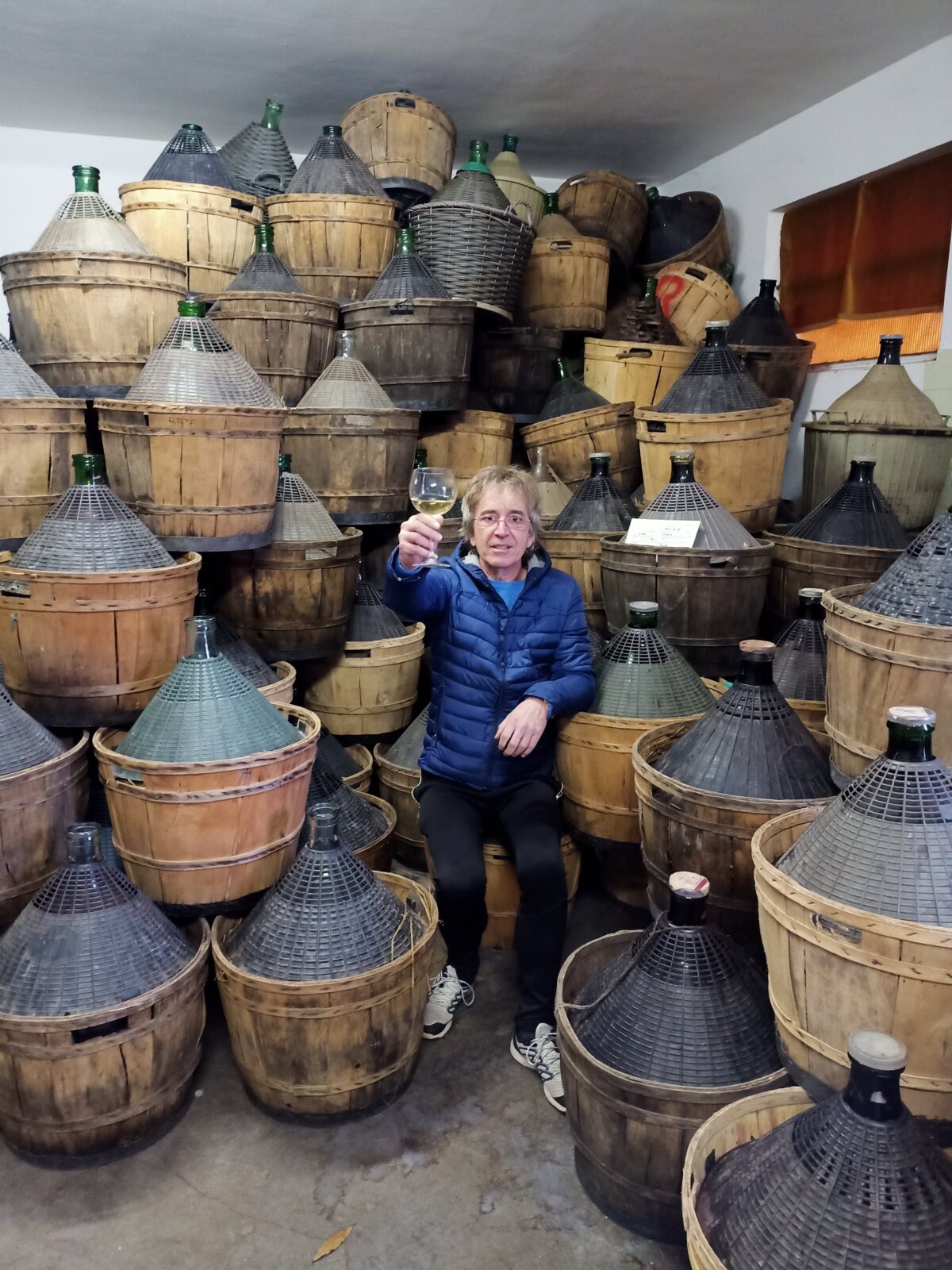
Every bottle of wine, every can of beer, every wheel of cheese carries within it a set of decisions that were made long before it reached the shelf or the table. Who grew the grapes, and how. Whether the soil was treated with chemicals or managed with the kind of patient, labor-intensive attention that produces something genuinely different. Whether the person who made it owns the land, or works for a company that owns many lands and optimizes across all of them. Whether the price reflects the real cost of doing things well, or the efficiency gains of doing things at scale.
These decisions are invisible in the finished product — unless you know what to look for, and unless someone along the chain has cared enough to make them visible. The independent producer is the person at the beginning of that chain who made the harder set of decisions. Understanding who they are, and why choosing their work matters, is not a matter of taste. It is a matter of what kind of economy you want to participate in.
Behind every good bottle there is a person who made a decision that the market did not require — and who paid the price of that decision in time, in labor, and in the refusal of a more convenient path.
Who the independent producer is
The independent producer is not defined by size alone, though size matters. What defines them is the relationship between the person and the thing they make — a relationship that has not been mediated, diluted, or broken by the imperatives of industrial production. They own or directly manage the land they work. They make decisions about soil, harvest, fermentation, and aging based on their own judgment and their own values rather than on the optimization criteria of a company whose primary obligation is to its shareholders. They are accountable, in a direct and personal way, for what comes out at the end.
In wine, this means the vigneron who tends their own vines, harvests by hand, ferments with indigenous yeasts, and bottles without additives — not because these practices are fashionable but because they produce wines that honestly express a specific piece of land in a specific year. In beer, it means the small brewery that selects its hops and malt for flavor and character rather than for consistency and shelf life. In food, it means the producer who raises animals or grows vegetables according to practices that are slower, more expensive, and more attentive to the health of the soil and the quality of the product than industrial methods allow.
What these producers share is not a certification or a style. It is a set of priorities: quality over volume, authenticity over consistency, the particular expression of a place over the generic product engineered for maximum market appeal. And the willingness to accept the economic consequences of those priorities — which are real, and which the market does not reward automatically.
The craftsman is the figure who refuses to separate the means from the end — for whom how something is made is inseparable from what it is.
What the market does to independent producers
The market is not neutral toward independent producers. It creates systematic pressure toward consolidation, standardization, and the subordination of quality to volume. A small winery that makes three thousand bottles a year of a wine that requires patient, labor-intensive work cannot compete on price with an industrial producer making three million bottles of something that approximates the same category. The distribution system — built for volume, for consistency, for the logistics of moving large quantities efficiently — is not designed to accommodate the small producer whose wines vary from year to year and whose output is insufficient to fill a container.
The result is that most of what independent producers make never reaches most of the people who would choose it, if they knew it existed. It circulates through narrow networks — specialist importers, independent wine bars, restaurants whose owners care enough to go and find it — rather than through the broad distribution channels that determine what most people encounter when they walk into a shop or sit down at a table.
This is not a failure of the market to find the best products. It is the market functioning as designed: rewarding efficiency, scale, and consistency while systematically undervaluing the qualities — character, specificity, the honest expression of a place and a practice — that make independent products genuinely worth choosing.
The market does not find the best. It finds the most scalable. These are not the same thing — and confusing them is one of the great intellectual errors of our time.
The direct relationship — why it matters
The alternative to the standard distribution system is the direct relationship: the bar, the restaurant, or the individual buyer who goes to find the producer, visits the vineyard or the farm, tastes the product in its context, and makes a selection based on their own judgment rather than on the recommendations of a sales representative whose job is to move inventory.
This kind of relationship changes what is possible. It allows the producer to sell at a price that reflects the real cost of their work rather than the price that the distribution chain will accept. It allows the buyer to offer something that the standard catalog does not contain — wines, beers, and foods whose presence on the list is the result of a specific choice rather than the default option. And it creates a form of accountability that the industrial supply chain systematically destroys: the buyer knows who made the product, under what conditions, and according to what values. The producer knows where their work is going and how it is being presented.
This accountability is not sentimental. It is structural. A direct relationship between producer and seller creates incentives that the market alone does not: incentives toward honesty, toward quality, toward the maintenance of the practices that made the product worth choosing in the first place. When a producer knows that their buyer visits the vineyard and understands what they are doing, they cannot hide behind a label. When a buyer has been to the farm and met the person who grew the grapes, they cannot pretend that provenance does not matter.
What we choose to buy, and from whom, is not a private act. It is a vote for a particular kind of economy — and economies are shaped, over time, by the accumulation of those votes.
The Vignaioli Indipendenti — a model worth understanding
The Vignaioli Indipendenti — the association of independent winegrowers — represents one of the most coherent attempts to articulate and defend what independent production actually means in practice. Their criteria are specific: members must grow their own grapes, vinify their own wine, and bottle under their own label. No buying in grapes or bulk wine. No outsourcing of the fundamental decisions. The vigneron must be present at every stage of the process — in the vineyard, in the cellar, and in the bottle.
The objective, as the association states it, is to keep the producer on the territory: to make the wine, to conserve the terroir, to defend the landscape, and to guarantee the consumer something that the industrial system cannot offer — a genuine relationship between a person, a place, and a product. This is not nostalgia for a pre-industrial past. It is a practical proposition about what makes wine worth drinking, and what kind of economy is worth sustaining.
Several producers on the wine list at Altotasso carry the Vignaioli Indipendenti mark — among them Antico Broilo, a five-generation family estate in the Colli Orientali del Friuli whose Friulano and Ribolla Gialla are produced with indigenous yeasts, extended aging on the lees, and an approach to the vineyard that combines organic certification with biodynamic practice. Their wines are not widely distributed. They are on the list because someone went to find them.
The vigneron must remain on the territory — to make the wine, to conserve the terroir, to defend the landscape, and for the great joy of the consumer.
Triple A — artisans, agriculture, area
The Triple A designation — Artigiani, Agricoltori, Artigiani, or in its broader formulation: attention to the artisan, to agriculture, and to the area — represents another attempt to define what independent production means beyond the simple fact of small scale. Triple A producers are selected by Josko Gravner and a small group of associates on criteria that include farming practice, cellar intervention, and the producer’s relationship to their territory. The emphasis is on maximum respect for nature, for the terroir, and for the consumer — in that order.
La Felce, a small producer from Liguria whose Felcebianco and Felcerosso appear on the Altotasso list, is a Triple A producer — wines made from old-vine grapes, fermented with indigenous yeasts in cement tanks, bottled without filtration or additives. The Felcebianco, a blend of Malvasia, Trebbiano, and Vermentino from forty-year-old vines, undergoes forty-eight hours of skin maceration before fermentation — a technique that produces a wine of genuine territorial character, saline and mineral, completely unlike anything produced by the same grapes under industrial conditions.
Cascina degli Ulivi — Bellotti, another Triple A producer from Piedmont whose wines appear on the list, was founded by Stefano Bellotti, one of the pioneers of biodynamic viticulture in Italy. He converted his estate in 1984 — decades before biodynamics became a marketing category — and spent his career demonstrating that the most interesting wines are made by doing less, not more: spontaneous fermentation, no additives, no manipulation, no shortcuts. His Semplicemente Bianco is exactly what the name promises: a simple, honest, direct expression of white grapes grown on living soil by someone who understood that simplicity is the hardest thing to achieve.
To choose an independent producer is to choose a different relationship to the world — one in which things are made by people who are accountable for them, in places that are specific, according to values that are not determined by the market alone.
Why choosing them matters
The case for choosing independent producers is not primarily aesthetic, though the aesthetic case is strong. It is economic and ethical. Every purchase is a small allocation of resources within an economy — a decision about which producers survive and which do not, which practices are sustained and which are abandoned, which landscapes are maintained and which are simplified into monocultures, which communities remain viable and which are emptied by the migration of young people to cities where there is work that does not require the kind of patient, skilled, poorly compensated labor that genuine independent production demands.
The Frankfurt School understood this with unusual clarity. Adorno’s analysis of the culture industry applies directly to the food and wine industry: the same mechanisms of standardization, the same suppression of the particular in favor of the generic, the same production of false needs and the management of genuine ones. The resistance he described — stubborn, local, committed to quality as a form of criticism — is exactly what independent producers practice, in their different register, every day.
At Altotasso, the wine list has been built since 2004 on the conviction that this resistance is worth supporting — not as ideology, but as practice. The wines on the list are there because someone went to find them, visited the producer, tasted in the cellar, and made a judgment that what was being made was worth bringing back to Bologna. That judgment is renewed with every selection and every purchase. It is, in the most literal sense, quality as a critical act.
Frequently Asked Questions
An independent producer is a person who owns or directly manages the land they work, makes their own decisions about production at every stage, and is personally accountable for the result. In wine, this means the vigneron who grows their own grapes, vinifies their own wine, and bottles under their own label. Independence is defined not by size alone but by the directness of the relationship between the person and what they make.
Vignaioli Indipendenti is an Italian association of independent winegrowers whose members must grow their own grapes, vinify their own wine, and bottle under their own label. The association’s objective is to keep the producer on the territory — making the wine, conserving the terroir, defending the landscape, and maintaining a genuine relationship between a person, a place, and a product.
Triple A designates producers selected for maximum respect for nature, terroir, and the consumer. The criteria include farming practice — organic or biodynamic — minimal cellar intervention, use of indigenous yeasts, and the producer’s relationship to their territory. It is not a certification but a selection made by a small group of producers and importers committed to genuine independence from industrial norms.
Choosing independent producers is an economic and ethical act as much as an aesthetic one. It sustains the practices, the landscapes, and the communities that industrial production systematically undermines. It creates accountability between the person who makes something and the person who buys it. And it supports a different model of production — one in which quality, specificity, and honest expression of a place matter more than volume, consistency, and maximum market appeal.
Altotasso has built its wine list since 2004 through direct relationships with independent producers — visiting vineyards, tasting in the cellar, and making selections based on personal judgment rather than standard distribution catalogs. The list includes natural, organic, and biodynamic producers from Friuli Collio, Alto Adige, Umbria, Piedmont, Liguria, and beyond. Several producers carry the Vignaioli Indipendenti mark or Triple A designation.
Altotasso is at Piazza San Francesco 6/d, Bologna, directly facing the Basilica di San Francesco. Open every day: Sunday and Monday 17:00–02:00, Tuesday to Thursday 17:00–03:15, Friday and Saturday 16:30–04:45. Contact: info@altotasso.com — +39 051 238003 — altotasso.com.
“The standard of living means nothing if it standardizes everything else. What we lose when we accept the generic is not only quality. It is the particular — and the particular is where all genuine experience begins.”
Minima Moralia srl · Piazza San Francesco 6/d · Bologna
info@altotasso.com · +39 051 238003 · altotasso.com