

Something has changed in the way people spend their evenings. Not dramatically, not all at once, but steadily and in one direction: more time alone with screens, less time in rooms with other people. The reasons are familiar — convenience, exhaustion, the infinite availability of entertainment that requires nothing of you except attention — and they are not trivial. But the Frankfurt School, writing decades before the smartphone existed, had already identified the mechanism behind this shift and understood its consequences more clearly than most contemporary commentary manages to.
The argument is not that screens are bad and bars are good. It is more precise and more uncomfortable than that: that the kind of experience produced by passive consumption of mediated content — however pleasurable, however personalized, however apparently connected — is structurally different from the kind of experience produced by genuine presence in a real space with real people. And that the difference matters, not just for individual wellbeing but for what kind of social life is possible at all.
Free time is not freedom. It is the extension of the working day by other means — the recuperation of the labor force through managed leisure that restores the capacity to work without disturbing the capacity to think.
The culture industry — and what it does to an evening
In 1944, Adorno and Horkheimer coined the term culture industry to describe the system by which mass-produced cultural products — radio, cinema, popular music — standardize desire, manage attention, and integrate individuals into the existing social order by offering controlled pleasure in place of genuine freedom. The culture industry, they argued, does not liberate the time that is not spent working. It colonizes it. It fills it with products designed to be consumed passively, that require nothing of the consumer except receptivity, and that reproduce in leisure the same structure of stimulus and response that defines industrial labor.
The television was the next stage of this process, and Adorno wrote about it with the same precision he had applied to radio and cinema. What concerned him was not the content — not the specific programmes or their quality — but the structure of the relationship between the viewer and the screen. A relationship of passivity, of reception without response, of spectacle without participation. The viewer does not act. They watch others act. They do not think, in the sense of producing something new. They process the stream of images and sounds that the screen delivers, in the order and at the pace that the medium determines.
The smartphone and the social media platform are the culture industry perfected. Everything Adorno identified in television is present in intensified form: the passive consumption of content produced by others, the stimulus-response cycle compressed to seconds, the illusion of participation — likes, shares, comments — that reproduces the form of social interaction while eliminating its substance. And one element is added that television did not have: the algorithm, which personalizes the stream so precisely that the illusion of free choice becomes total. You are not watching what everyone else watches. You are watching what was selected for you. This feels like freedom. It is its opposite.
The culture industry does not deceive its consumers about the existence of the pleasure it promises. What it deceives them about is the nature of freedom — substituting the freedom to choose among options it has pre-selected for the freedom to want something different altogether.
Erfahrung and Erlebnis — the two kinds of experience
Walter Benjamin drew a distinction that has become more useful with every passing decade: between Erfahrung and Erlebnis. Erfahrung — experience in the deep sense — is the kind of encounter with the world that leaves a lasting trace, that accumulates over time into wisdom, that changes the person who undergoes it. It requires duration, attention, and the willingness to be genuinely affected by what one meets. It is the experience of the craftsman who has spent years learning a skill, of the reader who has spent weeks with a difficult book, of the person who has spent an evening in genuine conversation with someone they did not know before.
Erlebnis — experience in the shallow sense — is the episodic, consumable event: the stimulus that is processed and forgotten, the impression that does not accumulate into anything, the endless present of sensation without consequence. Benjamin identified the modern city, with its crowd and its shocks, as a machine for producing Erlebnis at the expense of Erfahrung. The screen, with its infinite scroll and its algorithmic precision, has industrialized this process. Every swipe produces an Erlebnis. None of them produce Erfahrung.
The distinction matters because it describes what is actually lost when people stop going out and start staying in. It is not simply that they miss the pleasure of a particular evening. It is that the kind of experience available on a screen — however rich, however varied, however apparently social — is structurally incapable of producing the kind of experience that changes people, that builds communities, that makes cities worth living in. The Erfahrung that comes from an unexpected conversation at a bar, from hearing a musician you had never heard of in a small room, from sitting in a square until late with people you are only beginning to know — this cannot be streamed. It requires presence, and presence requires going out.
Experience has fallen in value. And it looks as if it will continue to fall into bottomlessness. Every glance at a newspaper demonstrates that it has reached a new low — that our picture of the world, overnight, has changed in ways that we had thought impossible.
The one-dimensional society — and the bar that resists it
Herbert Marcuse, writing in 1964, described advanced industrial society as one-dimensional: a society that has become so efficient at absorbing opposition, co-opting dissent, and converting genuine needs into manageable consumer preferences that the very capacity to imagine a different arrangement of life has been systematically eroded. The one-dimensional person is not oppressed in any obvious way. They are comfortable, entertained, and apparently free. What they have lost is the ability to want something that the system does not already provide — the capacity for what Marcuse called the Great Refusal: the refusal to accept the administered world as the only possible world.
The screen is the instrument of one-dimensionality perfected. It offers an inexhaustible supply of content, connection, and stimulation — all of it mediated, all of it monetized, all of it designed to keep the user engaged within the system rather than stepping outside it. The person who spends their evening scrolling is not bored. They are extremely busy processing an enormous volume of information and stimulation. What they are not doing is thinking, in the sense that requires silence and resistance; encountering, in the sense that requires genuine otherness; or being present, in the sense that requires inhabiting a specific physical space with specific other people at a specific moment that will not recur.
Going out — to a bar, to a square, to a concert in a small venue, to any space where the social life of a city is conducted without mediation — is a form of what Marcuse called the Great Refusal, scaled to the dimensions of an ordinary evening. It is the refusal of the administered leisure that the screen offers. It is the insistence that real life — unpredictable, inefficient, sometimes boring, occasionally transformative — is worth having. And it is the practical maintenance of the social infrastructure on which any genuine community depends: the spaces where people meet without an algorithm having decided they should.
The Great Refusal is the refusal of the administered world to be taken as the only possible world. It does not require a program. It requires the capacity to want something different — and the willingness to act on that want, even in small ways, even daily.
The social body — what disappears when we stop meeting
There is a level of social life that exists only in physical co-presence — that cannot be replicated online, however sophisticated the platform, because it depends on the specific conditions of being in the same room: shared air, shared noise, the involuntary proximity of bodies that did not choose to be together and must negotiate that proximity in real time. This is the level at which cities generate their energy, at which communities form and dissolve and reform, at which the stranger becomes an acquaintance and the acquaintance becomes something else.
Online social life does not replace this. It supplements it at best, and at worst it provides a simulacrum sufficiently convincing to reduce the felt need for the real thing — which then atrophies, like any capacity that goes unused. The person who has spent years conducting their social life primarily through screens has not developed a richer social life. They have developed a different relationship to the idea of social life — one that is more comfortable, more controlled, and less capable of the genuine encounter that produces genuine experience.
The bar, the osteria, the piazza — these are not nostalgic alternatives to digital modernity. They are the infrastructure of real social life, and their health is a direct indicator of the health of the communities they serve. A city where people go out, where bars and cultural spaces have genuine community rather than tourist traffic, where the square is used by residents rather than managed for visitors — this is a city where something is still alive that cannot be administered away. A city where everyone stays home and connects online is a city that has traded its social body for its digital shadow.
The city is not a collection of buildings. It is a set of encounters — between strangers, between ideas, between the past deposited in its stones and the present that moves through them. When the encounters stop, the city becomes a backdrop.
Bologna, Altotasso, and the practice of going out
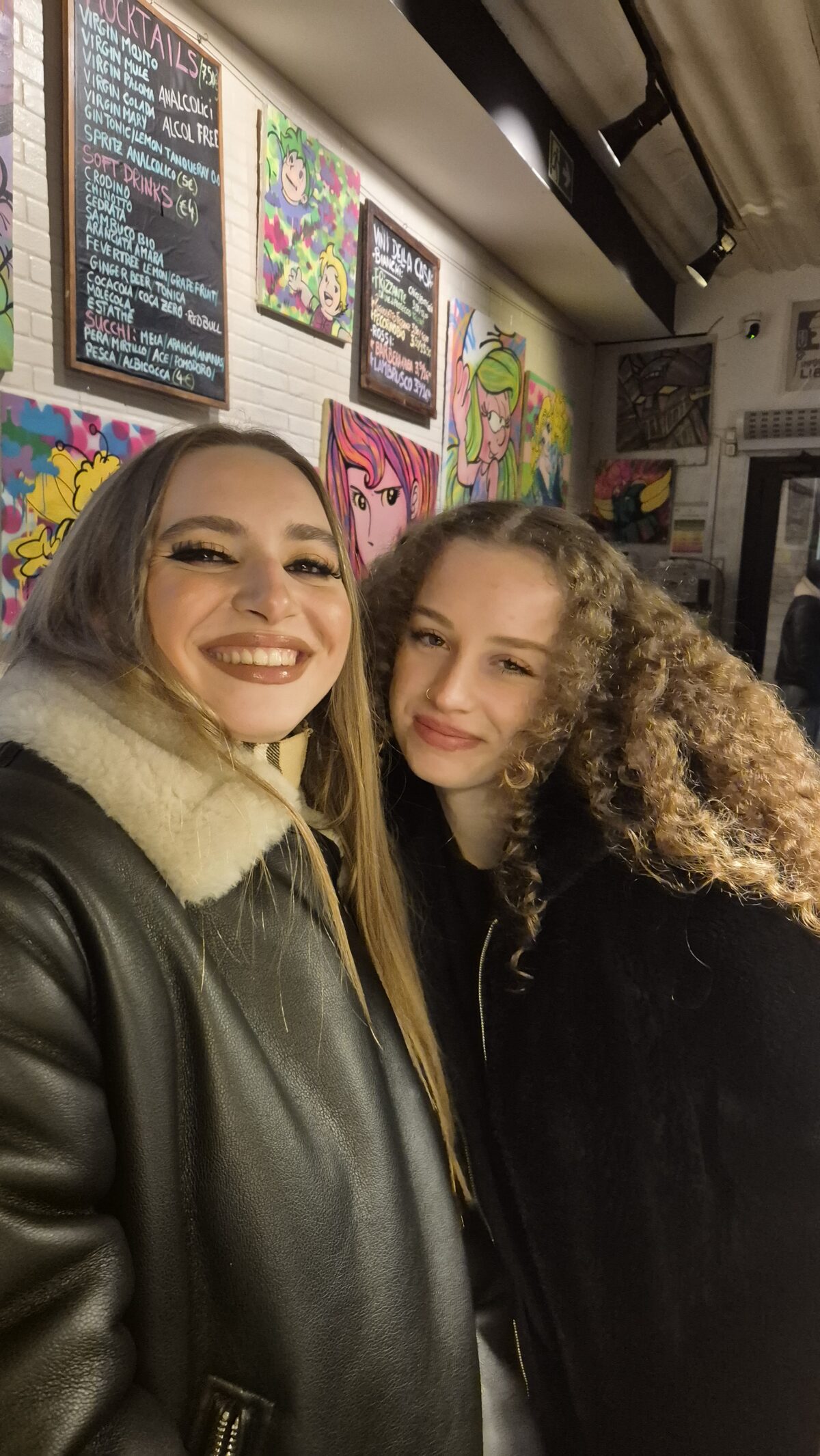
Bologna is, by most measures, a city that still goes out. Its evening culture — the aperitivo that extends into dinner, the late bars, the music venues, the piazzas that fill after dark — is not a tourist performance. It is a genuine social practice, maintained by residents who have not yet fully traded it for the screen. Piazza San Francesco on a warm evening, with people on the benches and the lights of the bars reflected on the stones of the Basilica, is not picturesque. It is alive — in the precise sense that something unpredictable is happening, that people are encountering each other without a platform having decided they should, that the evening is unscripted.
Altotasso, at Piazza San Francesco 6/d, has been one of the spaces where this social life is conducted for over twenty years. It is open every day, from late afternoon into the early hours. It offers natural wines, craft beers, and cocktails alongside live music, art exhibitions, and cultural events — not as a programme designed to attract a demographic, but as the accumulated result of consistent choices about what kind of space to maintain and what kind of community to invite into it.
The Frankfurt School would not have described Altotasso as a revolutionary space. They were too rigorous for that kind of inflation. But they would have recognized it as something worth having: a space where the Erfahrung that the screen cannot produce is still possible, where the Great Refusal of the administered evening takes the modest and repeatable form of going out, sitting down, ordering something made by someone who cared how it was made, and talking to whoever is there.
This is not a solution to the problems Adorno, Benjamin, and Marcuse identified. It is a practice — small, local, daily — of not accepting the administered world as the only possible world. Which is, in the end, what they were asking for.
It is not our task to hold fast to ourselves but to renew ourselves — and the renewal happens in encounter, in the space between people, in the room where something unplanned can still occur.
Frequently Asked Questions
Adorno argued that free time in modern society is not genuine freedom. The culture industry — mass-produced entertainment through radio, cinema, television, and now digital platforms — colonizes leisure time with passive consumption that reproduces the same structure of stimulus and response as industrial labor. Free time becomes managed time, and the capacity for genuine autonomous experience is systematically eroded.
Walter Benjamin distinguished between Erfahrung — deep experience that accumulates over time, leaves a lasting trace, and changes the person who undergoes it — and Erlebnis — shallow, episodic experience that is consumed and forgotten. The screen produces Erlebnis in industrial quantities. Genuine social encounters, conversations, and presence in real spaces produce Erfahrung. The two are not interchangeable.
In One-Dimensional Man, Herbert Marcuse describes the Great Refusal as the refusal to accept the administered world — the world as organized by advanced capitalism — as the only possible world. It is the insistence that genuine needs, genuine freedom, and genuine social life exist beyond what the system provides. Applied to everyday life, it can take the modest form of choosing real presence over mediated connection — going out rather than staying in.
Going out maintains the infrastructure of real social life — the spaces where people meet without mediation, where unexpected encounters happen, where communities form and are sustained. A city where people go out is a city with a social body. A city where everyone stays home and connects digitally has traded that social body for its digital shadow. The bar, the osteria, and the piazza are not optional extras. They are the fabric of urban social life.
The Frankfurt School was not interested in abstract philosophy. It was interested in how power operates in everyday life — in leisure, in taste, in the small choices that constitute how people actually live. A bar that resists the standardized logic of the hospitality industry, that builds community rather than managing customers, that chooses quality over convenience and real encounter over mediated connection — this is the Frankfurt School’s critical theory applied in practice, at the scale of an ordinary evening.
Altotasso is at Piazza San Francesco 6/d, Bologna, directly facing the Basilica di San Francesco. Open every day: Sunday and Monday 17:00–02:00, Tuesday to Thursday 17:00–03:15, Friday and Saturday 16:30–04:45. Contact: info@altotasso.com — +39 051 238003 — altotasso.com.
“To be present — fully, physically, without a screen between oneself and the world — is not a small thing. In a society organized around managed distraction, it is one of the few genuinely radical acts available to an ordinary person on an ordinary evening.”
Minima Moralia srl · Piazza San Francesco 6/d · Bologna
info@altotasso.com · +39 051 238003 · altotasso.com