

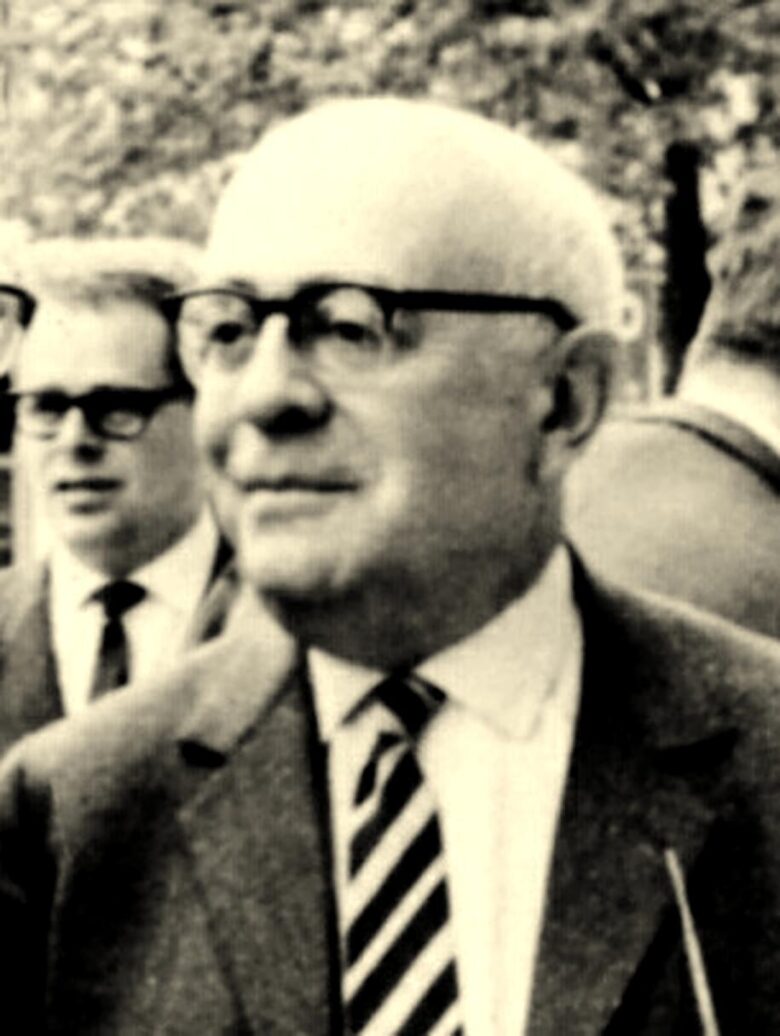
The Frankfurt School is usually encountered in universities — in philosophy seminars, in sociology courses, in the footnotes of academic papers about culture and power. It is treated as difficult, abstract, and remote from ordinary experience. This is almost exactly the opposite of what its founders intended.
Adorno, Horkheimer, Benjamin, Marcuse — the thinkers associated with the Institut für Sozialforschung founded in Frankfurt in 1923 — were not interested in building a system of thought that would live in libraries. They were interested in understanding how power operates in everyday life: in the music people listen to, the films they watch, the food they eat, the spaces they inhabit, the choices they make and believe are free but are in fact shaped by forces they cannot see. Critical Theory, as they called it, was always meant to be a tool for understanding the world as it is actually lived — and for imagining how it might be lived differently.
The condition of untruth is not merely an intellectual error. It is a way of living — embedded in habits, in tastes, in the small daily choices that seem personal but are in fact administered from above.
What the Frankfurt School actually was
The Institut für Sozialforschung — the Institute for Social Research — was founded in Frankfurt in 1923 as an independent research center affiliated with the university but funded privately, which gave it an unusual degree of intellectual freedom. Its early directors were Marxist in orientation but independent of the Communist Party, which allowed them to pursue lines of inquiry that orthodox Marxism had not explored — particularly the question of why, in advanced capitalist societies, the working class had not revolted as Marx predicted, but had instead become increasingly integrated into the system it was supposed to overthrow.
The answer they developed — associated above all with Adorno and Horkheimer’s Dialectic of Enlightenment, written during their American exile and published in 1947 — was that capitalism had developed a new mechanism of social control: the culture industry. Mass-produced culture — films, popular music, radio, advertising — did not simply reflect social reality. It shaped it. It produced desires, identities, and ways of understanding the world that were compatible with the existing order. It made people want what the system wanted them to want. And it did this not through force but through pleasure — through entertainment, through the satisfaction of standardized needs, through the constant promise of a happiness that was always just slightly out of reach.
This analysis has aged remarkably well. Replace radio and cinema with social media and streaming platforms, and the argument is stronger than ever. The mechanisms of attention capture, algorithmic recommendation, and platform-mediated desire that shape contemporary life are the culture industry made exponentially more efficient and pervasive.
Enlightenment is totalitarian. The program of the Enlightenment was the disenchantment of the world — the dissolution of myths and the substitution of knowledge for fancy. What it did not foresee was that knowledge itself would become a commodity.
Everyday life as the terrain of critical theory
The Frankfurt School’s most radical insight — and the one that is most often lost in academic treatments — is that the terrain of critical analysis is not primarily economics or politics in the conventional sense. It is everyday life: the texture of ordinary experience, the habits and tastes and small decisions that constitute the fabric of how people actually live.
What you eat and how it was produced. What you drink and who made it. What music you listen to and through what channel. What spaces you choose to inhabit and what kind of social life those spaces make possible. These are not trivial questions that distract from the real political ones. They are the real political questions, because they are the terrain on which the culture industry operates most effectively — precisely because they feel personal, free, and uncontaminated by ideology.
Adorno’s Minima Moralia is the fullest expression of this insight. Its 153 fragments move across subjects that might seem peripheral — gift-giving, the layout of modern apartments, the behavior of people at parties, the experience of eating in restaurants — and find in each of them a compressed reflection of the social whole. The way a society organizes its pleasures tells you as much about its structures of power as the way it organizes its economy. Possibly more, because the pleasures are where people are least on guard.
He who has once begun to see how the way people hold their forks, choose their words, laugh at their own jokes — how all of this is shaped by forces they cannot name — cannot stop seeing it. This is both the gift and the burden of critical thought.
The culture industry — what it means for a bar in Bologna
The concept of the culture industry applies with uncomfortable precision to the contemporary bar and restaurant scene. The proliferation of venues that look independent but are formatted according to the same logic — the craft beer that is owned by a multinational, the natural wine that is a marketing category rather than a practice, the aperitivo that is Instagram-optimized before it is drinkable, the cultural event that is a customer acquisition strategy dressed in the language of community — this is the culture industry operating in the hospitality sector.
The tell is always the same: the form of independence without its substance. The aesthetic of authenticity without the practices that produce authentic things. The language of quality without the choices that quality actually requires — the harder suppliers, the smaller margins, the willingness to offer something that not everyone will like because it is genuinely particular rather than carefully optimized for broad appeal.
Against this, the Frankfurt School does not offer a program. It offers a method: the sustained, critical attention to what is actually happening beneath the surface of things. Applied to a bar, this method produces specific questions. Where does the wine come from, and who decided that? Why is this beer on the list and not another? What kind of art is on the walls, and how did it get there? Who plays on this stage, and why? What kind of conversation does this room make possible, and what kind does it foreclose?
Free time is not freedom. It is the extension of the working day by other means — the recuperation of the labor force through managed leisure, through the consumption of standardized pleasures that restore the capacity to work without disturbing the capacity to think.
Altotasso as critical practice
This is the context in which Altotasso makes sense — not as a bar with an interesting philosophy, but as a space where the questions the Frankfurt School raised about everyday life are answered, daily, through practice rather than through argument.
The wine list is built through direct relationships with small, independent producers — natural, organic, and biodynamic winemakers who work outside the standardized distribution system. This is not a marketing choice. It is the answer to a specific question: where does this wine come from, who made it, and does the way it was made reflect a genuine relationship between a person and a piece of land — or is it a product engineered for a market segment? The answer determines what goes on the list and what does not.
The walls are available to artists who have no access to the institutional gallery circuit — free of charge, free of curatorial conditions, free of the commercial logic that determines what gets shown in spaces where showing costs money. This is the answer to a different question: what happens to art that the market has not yet validated? It gets shown anyway, because the criterion is not marketability but whether the work says something worth looking at.
The cultural programme — live music, book presentations, poetry readings, film screenings — is built around the same criterion. Not what will attract the largest audience or generate the most social media engagement, but what is worth hearing, reading, watching, discussing. The room that results from these choices is different from the rooms produced by the optimized logic of contemporary hospitality. It is less predictable, less comfortable in the generic sense, and more genuinely interesting.
Minima Moralia srl — the company that manages Altotasso, and whose name comes directly from Adorno’s book — was founded on the conviction that this kind of practice is not naive or commercially suicidal. It is a different model, one that produces something the optimized model cannot: a space with genuine character, a community with genuine loyalty, and twenty years of accumulated identity that no amount of branding can manufacture.
The only philosophy which can be responsibly practised in face of despair is the attempt to contemplate all things as they would present themselves from the standpoint of redemption.
Frequently Asked Questions
The Frankfurt School refers to the group of thinkers associated with the Institut für Sozialforschung, founded in Frankfurt in 1923. Its major figures include Theodor W. Adorno, Max Horkheimer, Walter Benjamin, Herbert Marcuse, and Erich Fromm. They developed Critical Theory — a form of social analysis that examines how power operates through culture, everyday life, and the structures of consciousness rather than only through economics and politics.
Critical Theory is the analytical approach developed by the Frankfurt School — a form of social philosophy that seeks to understand how existing social arrangements reproduce themselves through culture, ideology, and everyday practice, and to identify the conditions under which they might be transformed. It is distinguished from traditional theory by its commitment to practical emancipation rather than purely descriptive analysis.
The culture industry is the concept developed by Adorno and Horkheimer in Dialectic of Enlightenment (1947) to describe the system by which mass-produced cultural products — films, music, advertising, entertainment — standardize desire, shape identity, and integrate individuals into the existing social order by offering managed pleasure in place of genuine freedom. The concept remains highly relevant to contemporary digital media and platform economies.
Minima Moralia: Reflections on a Damaged Life is a book of philosophical fragments by Theodor W. Adorno, written during his American exile between 1944 and 1947 and published in 1951. It consists of 153 aphorisms on everyday life — on experience, on culture, on the small choices that constitute the texture of how people live — approached from the perspective of Critical Theory. It is the philosophical foundation of Minima Moralia srl.
Critical Theory insists that the terrain of political and social analysis is everyday life — the choices people make about what to eat, drink, listen to, and where to spend their time. A bar that takes these choices seriously — that selects its wines through direct relationships with independent producers, that gives free exhibition space to artists outside the commercial circuit, that builds its cultural programme around quality rather than audience size — is applying Critical Theory in practice rather than in the abstract.
Altotasso is at Piazza San Francesco 6/d, Bologna. Open every day: Sunday and Monday 17:00–02:00, Tuesday to Thursday 17:00–03:15, Friday and Saturday 16:30–04:45. Contact: info@altotasso.com — +39 051 238003 — altotasso.com.
“The splinter in your eye is the best magnifying glass available.”
Minima Moralia srl · Piazza San Francesco 6/d · Bologna
info@altotasso.com · +39 051 238003 · altotasso.com