

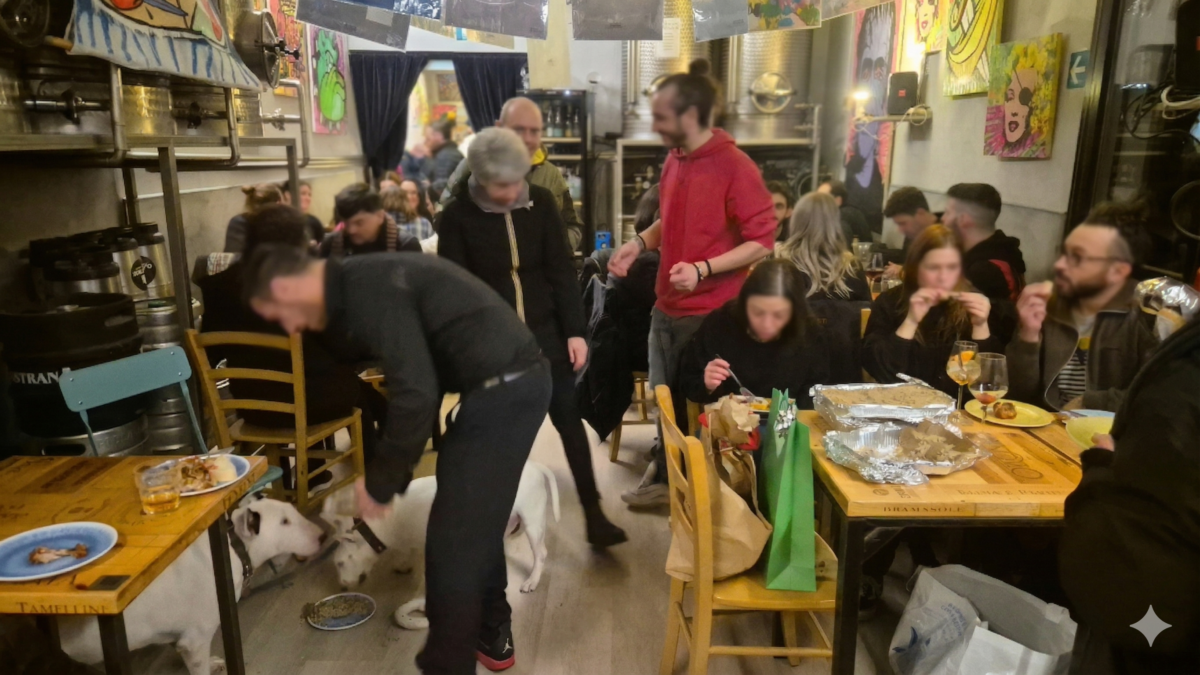
Bologna is one of the most consistently underestimated cities in Italy. Visitors who know it tend to know it well – they return, they recommend it quietly to people they trust, they compare it favorably to places that receive ten times the attention and ten times the tourists. Visitors who do not know it tend to pass through on the way to Florence or Venice, spend a day, eat well, and leave without understanding what they missed.
What the tourist guides get wrong about Bologna is not the facts. The facts are accurate enough – the oldest university in the world, the porticoes, the food, the two towers. What they get wrong is the emphasis. They describe the monuments and miss the city. They list the restaurants and miss the culture of eating. They mention the university and miss what fifty thousand students do to the social life of a place. They treat Bologna as a destination to be consumed rather than a city to be inhabited, however briefly – and in doing so they prepare visitors for a completely different experience from the one that makes Bologna worth visiting.
A city is not its monuments. It is the sum of the practices of the people who inhabit it – and the visitor who only sees the monuments has seen the least interesting part.
Wrong thing number one – Bologna is primarily about the food
Bologna is called la Grassa – the fat one – and the food is extraordinary. Tortellini in brodo, tagliatelle al ragu, mortadella that bears no relationship to the industrially produced version that carries its name in the rest of the world – these things are real and worth eating and worth seeking out. The tourist guides are not wrong to mention them.
What they get wrong is the implication that food is the primary reason to visit – that Bologna is, essentially, a gastronomic destination with some history and architecture attached. This framing misses almost everything. The food is a consequence of a broader culture: a culture of quality, of attention to provenance, of the refusal to accept the industrially produced substitute when the genuine article is available. That culture extends far beyond the kitchen. It is present in the wine bars that select their lists with the same seriousness that the best restaurants select their ingredients. It is present in the independent bookshops, in the cultural spaces, in the attitude toward making and sharing things that pervades the city’s social life. The food is an expression of something larger. Visiting Bologna for the food alone is like visiting a library for the chairs.
Eating well is not a pleasure separate from living well. It is the same practice applied to a different domain – the insistence that what enters the body should be made with care, by people who know what they are doing, from ingredients that are what they claim to be.
Wrong thing number two – the porticoes are a picturesque feature
Every guide mentions the porticoes. Bologna has the longest network of covered walkways in the world – forty-five kilometers of continuous arcade running through the historic center and beyond, sheltering pedestrians from rain and sun and connecting the city’s spaces in a way that is unique in Europe. They are listed as a UNESCO World Heritage Site. They are, undeniably, beautiful.
What the guides miss is that the porticoes are not primarily a visual feature. They are a social technology. They create a particular quality of semi-public space that does not exist without them: space that is protected from the weather but not enclosed, that belongs to no one and therefore to everyone, that makes the act of walking through the city a fundamentally different experience from walking through a city without them. Under the porticoes, you can slow down. You can stop. You can have a conversation in the rain without getting wet. You can read a notice, examine a shop window, observe the street without being buffeted by traffic. The porticoes are what make Bologna a city that is genuinely pleasant to inhabit rather than simply to visit – and their significance is experiential rather than photographic.
Benjamin would have understood this immediately. The porticoes are Bologna’s equivalent of the Parisian passages he wrote about in The Arcades Project: covered spaces that are neither fully public nor fully private, that create a different relationship between the pedestrian and the city, that encourage a slower and more attentive mode of movement than the open street allows. To walk the porticoes of Bologna with Benjamin’s concept of the flaneur in mind is to understand them as something more than architecture – as the physical infrastructure of a particular kind of urban social life.
Not to find one’s way about in a city is of little interest. But to lose oneself in a city – as one loses oneself in a forest – that calls for quite a different schooling. The porticoes of Bologna are the school.
Wrong thing number three – one day is enough
The most common piece of advice in tourist guides about Bologna is that it can be done in a day – that it is a manageable city, compact enough to cover its highlights in a single visit. This is true in the sense that the main monuments are within walking distance of each other and can be seen in a few hours. It is completely wrong in the sense that matters.
Bologna is not a city of monuments. It is a city of atmosphere – of the accumulated character of streets and neighborhoods and social spaces that reveals itself slowly, over repeated visits and extended stays. The difference between a day in Bologna and a week in Bologna is not quantitative – it is not simply more of the same things. It is qualitative: the understanding of the city that comes from being in it at different times of day and night, from discovering the neighborhoods that are not on the tourist circuit, from beginning to recognize the rhythms of the place and the people who inhabit it.
The evening, in particular, is where Bologna reveals itself most fully. The city after seven in the evening – when the aperitivo begins, when the streets fill with students and residents rather than tourists, when the bars and osterie that have been serving the neighborhood for decades come alive – is a completely different place from the daytime city of monuments and museums. A visitor who leaves before dinner has not seen Bologna. They have seen its surface.
A city worth visiting is a city worth spending the night in. The visitor who arrives in the morning and leaves in the afternoon has not experienced the city – they have audited it.
Wrong thing number four – the center is the city
Tourist guides concentrate, almost exclusively, on the area within the first ring of streets around Piazza Maggiore. This is understandable – the monuments are here, the famous restaurants are here, the hotels are here. But it produces a profoundly distorted image of the city.
The Bologna that is most worth knowing is not concentrated around Piazza Maggiore. It is distributed through neighborhoods that the tourist circuit does not visit: the area around Via del Pratello and Piazza San Francesco, which has maintained more of the character of a genuine working neighborhood than most of the historic center; the university district around Via Zamboni, which has its own energy and rhythm quite different from the more commercial center; the areas further out – the Bolognina, the Navile – where the city’s postwar history is deposited in a form that the center has largely erased.
Each of these areas has its own bars, its own osterie, its own cultural spaces – and they are used primarily by residents rather than visitors, which makes them more interesting to spend time in. The visitor who confines themselves to the tourist center of Bologna is visiting a city that has been arranged for their consumption. The visitor who walks fifteen minutes in any direction from Piazza Maggiore is visiting a city that is being lived in.
The tourist sees what they came to see. The traveler sees what is there. The difference is not in the destination but in the quality of attention brought to it.
Wrong thing number five – Bologna is safe and a bit boring
There is a version of the Bologna reputation that describes it as a pleasant, well-run, somewhat provincial city – livable, comfortable, with good food and a mild political progressivism, but without the edge or energy that makes cities genuinely interesting. This reputation is not entirely without foundation: Bologna is, by the standards of Italian cities, unusually well administered, and it lacks the chaos and grandeur of Naples, the international intensity of Milan, the sheer visual density of Rome.
What this reputation misses is the intellectual and cultural life of the city – which is, for its size, extraordinary. The university brings fifty thousand students and a faculty of international standing. The cultural institutions – the Cineteca, the MAMbo, the Museo della Musica – are serious and well-curated. The independent cultural scene, while smaller than it was in the 1970s, remains active: small music venues, independent publishers, artist-run spaces, bars and osterie that function as cultural centers as much as places to drink. Bologna is not boring. It is quiet in the way that a city with a rich internal life is quiet – because its energy is directed inward, into the conversations and projects and communities of its residents, rather than outward into spectacle and performance for visitors.
The cities that are most interesting to live in are rarely the most interesting to photograph. Their qualities are experiential rather than visual – they reveal themselves slowly, to people who stay long enough to let them.
What to actually do – a different kind of guide
Walk the porticoes slowly, without a destination. Not to get somewhere, but to understand what they do to the experience of moving through a city. Find the point where the tourist circuit ends and the neighborhood begins – usually about ten minutes’ walk from Piazza Maggiore in any direction – and spend time there.
Go out in the evening. Not to a restaurant that appears on every international list, but to one of the osterie that has been serving the same neighborhood for decades, where the menu is short and seasonal and the wine list reflects genuine choices. Stay late. The city after midnight is different from the city at nine – quieter, more local, more itself.
Go to the area around Via del Pratello and Piazza San Francesco. This is the part of Bologna that has maintained the most consistent alternative character – independent bars, osterie, cultural spaces that have been what they are for long enough that their identity is not easily dislodged by commercial pressure. It is not a tourist destination. It is a neighborhood.
At Piazza San Francesco 6/d, directly facing the Basilica, Altotasso has been open since 2004 – a bar and cultural space that combines natural wines selected through direct relationships with independent producers, craft beers, live music, art exhibitions, and a genuinely mixed crowd of students, residents, artists, and people passing through. It is listed in the Slow Food guide Osterie d’Italia. It is open every day from late afternoon into the early hours. It is exactly the kind of place that tourist guides do not mention – and exactly the kind of place that makes Bologna worth visiting.
Frequently Asked Questions
A minimum of two full days to begin to understand the city – one for the monuments and the center, one for the neighborhoods and the evening. Three days is better. Bologna rewards extended stays because its most interesting qualities are atmospheric rather than monumental and reveal themselves through repeated encounter rather than systematic sightseeing.
The historic center puts everything within walking distance, but the area around Via del Pratello and Piazza San Francesco offers a more genuinely local experience – closer to the independent bars, osterie, and cultural spaces that constitute the city’s alternative cultural life, and slightly removed from the tourist concentration around Piazza Maggiore.
Bologna has one of the most active evening cultures of any Italian city of its size. The aperitivo begins around six and extends into dinner; the bars and osterie stay open late; the university population ensures a year-round energy that does not depend on tourist seasons. The area around Via del Pratello and Piazza San Francesco is particularly active – a concentration of independent bars and cultural spaces that serve a genuinely local crowd.
They are different experiences. Florence and Venice offer greater concentrations of canonical art and architecture; Bologna offers a more livable, less tourist-saturated city with a richer social and cultural life at street level. For visitors interested in food, wine, independent culture, and the experience of a genuinely inhabited Italian city rather than a managed heritage site, Bologna is consistently more rewarding.
The porticoes – walked slowly, not photographed quickly. The area around Via del Pratello and Piazza San Francesco in the evening. A meal in an osteria that is not on the international tourist lists. The Cineteca di Bologna for its archive screenings. And Altotasso at Piazza San Francesco 6/d – open every day from late afternoon, with natural wines, craft beers, live music, and a room that feels like Bologna at its most itself.
Altotasso is at Piazza San Francesco 6/d, Bologna, directly facing the Basilica di San Francesco. Open every day: Sunday and Monday 17:00 – 02:00, Tuesday to Thursday 17:00 – 03:15, Friday and Saturday 16:30 – 04:45. Contact: info@altotasso.com – +39 051 238003 – altotasso.com.
“Tourists don’t know where they’ve been. Travelers don’t know where they’re going. The difference is in what they are willing to let happen to them along the way.”
Minima Moralia srl – Piazza San Francesco 6/d – Bologna
info@altotasso.com – +39 051 238003 – altotasso.com